Eligibility
The minimum qualification required to apply is a pass in the 10+2 Science, Commerce, or Arts examination from PUC, ISC, CBSE, or an equivalent board.

BBA Entrepreneurship programme offered at JU-CMS is designed for aspiring student entrepreneurs. This program stands out as a transformative journey for the aspiring student entrepreneurs, offering a structured and immersive experience that blends academic rigour with real-world application.
The Entrepreneurship program is not just about starting a business; it’s about cultivating an entrepreneurial mindset—a combination of creativity, adaptability, resilience, and problem-solving skills. It equips them with a competitive edge in using the latest in AI technology, offering a brilliant blend of time-tested, interdisciplinary skills and entrepreneurial experience. Students engage with core management principles through interactive learning. mentoring and a continuous exchange of thoughts with existing entrepreneurs, turning them to turn their ideas into thriving ventures.
On successful completion, the student would have garnered expertise in identifying an opportunity, building a startup to explore and disrupt the industry segment. They will also be equipped with the skills to harness Al tools for harnessing market insights and analytics to support innovative business strategies and entrepreneurial decision making
006
4 Years
3 years - 120 Credits 4 years (Honours / Honours with Research) - 160 Credits
The minimum qualification required to apply is a pass in the 10+2 Science, Commerce, or Arts examination from PUC, ISC, CBSE, or an equivalent board.
The BBA Entrepreneurship programme also offers value-added programmes like Toastmasters International, Stock Market, Digital Marketing, and Graphic Designing for the integrated development of its students. These programmes and courses focus on many skills, ranging from effective communication to shaping the most promising entrepreneur. As one of the leading BBA Entrepreneurship colleges in India, we ensure that our students receive a well-rounded education beyond traditional business management. This comprehensive approach prepares students for success in BBA Entrepreneurship, equipping them with both the theoretical knowledge and practical skills necessary for the dynamic world of business.
The programme offers specialisation courses in Finance, Food & Beverage, Textile & Apparel.
Note: Mandatory internship for all three years of the BBA Entrepreneurship programme.
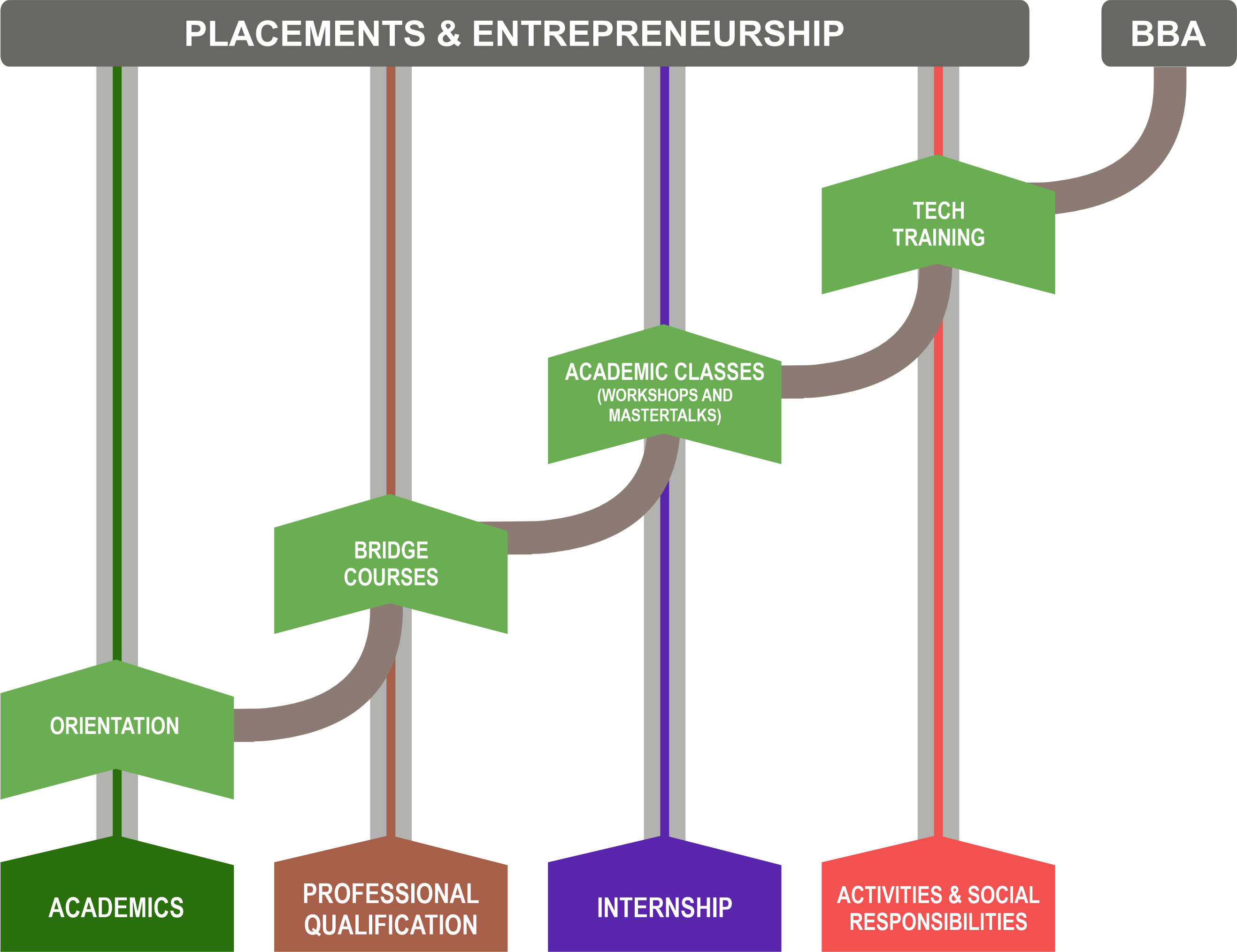
Entrepreneurship has a wide scope. It allows people to start businesses, create jobs, and bring new ideas to the market. It plays a big role in economic growth.
The four types of entrepreneurship are small business, scalable startup, large company, and social entrepreneurship.
The main goal of entrepreneurship is to solve problems by creating businesses that offer new products or services.
Entrepreneurship helps the economy by creating jobs, driving innovation, and improving people's lives through new ideas.
BBA in Entrepreneurship is a degree that teaches students how to start, manage, and grow a business.
Entrepreneurs need skills like problem-solving, leadership, creativity, decision-making, and financial management.
